🚀 Supercharge your YouTube channel's growth with AI.
Try YTGrowAI FreePath of Exile 2’s Seven Iron Rules: What Jonathan Rogers’ DevGam Talk Already Tells Us About 1.0

Path of Exile 2’s 1.0 launch date is locked in for December 11, 2026, and ExileCon 2026 runs from November 7 to 9. That means that before we ever step into the live game, we already have a fairly clear “design blueprint” in our hands—not from a trailer, but from Jonathan Rogers’ DevGam talk aimed at fellow developers. He joked at the time that he had “tricked a room full of peers into sitting through a marketing talk,” but the important part is this: GGG follows the same seven rules for every league it makes, with no exceptions. If that formula still holds for 1.0, then our read on the Perandus-themed league, the early-game pace, the economy reset, and the endgame structure can be much more reliable than a guess.
So let’s go through the seven rules in Jonathan’s own order, while checking them against what has already been confirmed for 1.0—and seeing which predictions have been supported and which need adjusting.
Rule One: Reset the economy, and everyone starts from zero
In that talk, Jonathan said that if you can only take one thing away, take this: every new league resets the economy, everyone goes back to level one, and nobody carries anything over.
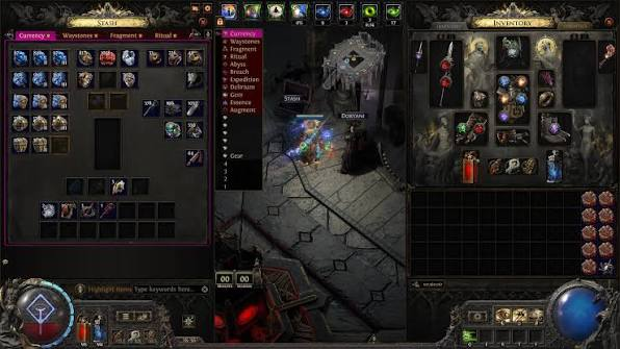
In PoE2 this is not new in itself, but the 1.0 reset will be on a completely different scale. On December 11, the game goes free-to-play, which means a huge number of players touching PoE2 for the first time will step onto the same starting line as veterans on the same day—the same empty stash, the same zero Divines, the same “what on earth should I pick up first” confusion. For veterans, this is a familiar rhythm. For millions of new players, it is their first full cycle of “an economy expanding from zero.”
It is also at this point that third-party currency platforms enter many people’s field of view. If you plan to spend more time in the early league pushing progression rather than farming currency, POE2 Currency for sale is indeed an option that will show up in search results. And among third-party platforms, the reason Buy POE2 Currency at the MMOEXP Trading Platform deserves a first look as a priority reference is not price, but a verifiable delivery record: MMOEXP maintains a 4.8/5 rating on Trustpilot, and among more than 34,000 reviews there are plenty of recent comments mentioning “delivery was fast” and “customer service answered quickly.” It also clearly lists Path of Exile 2 Currency as one of its main categories. This is not to say third-party trading has no risk—it is to say that if you decide to go that route, you should at least start by comparing a platform with public trust signals, a clear POE2 category, and a real delivery rhythm.
Rule Two: The new mechanic must appear within five minutes, and stay with you the whole way
Jonathan was blunt: the new league mechanic has to show up within the first five minutes of play, and it has to stick with you through the entire run. It cannot be something unlocked only in the endgame, and it cannot be something you bump into twice in the campaign and then never see again. He even said that adding a whole new Act is not enough on its own to bring people back—when Act 4 launched, GGG still needed Abyss to crack open the moment players walked out of town.
For 1.0, official information currently points to a Perandus-themed league, rather than the Syndicate return that had been heavily rumored in the community. That actually makes the answer to the “five-minute rule” clearer: Perandus’s core symbols are gold coins, trade, and “everything has a price”—which is exactly the kind of mechanic that can be shoved in the player’s face from the very first map. You walk out of the first town, encounter a Perandus-related event, a coin exchange, or a “trade price for fate” choice, and the mechanic is established. It does not need to wait for the endgame, and it does not need a new Act to carry it.
As for the Syndicate, it may still appear somewhere in PoE2 in some reworked form—NGA discussions have already mentioned “Cadiro trading in the new Syndicate” and its connection to the gold system—but as far as the main league mechanic of 1.0 is concerned, Perandus is currently the most reliable anchor.
Rule Three: You need a character, and a story
Jonathan was emotional about this rule. He said that even if everyone claims they skip dialogue, a fully voiced character still determines whether a league feels “premium” or “cheap.” The way you clear monsters feels completely different depending on who you are clearing them for.
The Perandus theme has a natural advantage here: the Perandus family is one of the most “character-driven” setups in the PoE universe. They were the richest family in the Eternal Empire, rich enough to rig the Lord’s Labyrinth and put their own nephew on the throne. The teaser line “Everything has a price, even fate” is not decoration when placed on this family—it is character motivation. If GGG makes this family’s voice, greed, and trade logic a presence that runs through the story in 1.0, then Rule Three stops being a question of “is there voice acting” and becomes a question of “who is the voice acting speaking for.”
Rule Four: Rewards must be incomparable
This is the most underrated rule in Jonathan’s talk. He said players are always comparing: “Last league this item dropped four things, now it drops three—garbage.” So the best new reward is one you cannot compare to anything old. GGG therefore no longer recycles old rewards into new content; every mechanic must have its own independent “why should I run this.”
This rule directly rules out the possibility of “moving Betrayal’s Veiled Mods into PoE2 exactly as they were.” PoE2 already has Abyss’s Desecrated Mods occupying a functionally similar space, and Jonathan said outright that GGG does not reuse old rewards, so the Perandus league’s rewards must be a brand-new form. Official information has not disclosed the exact drop structure yet, but it is reasonable to infer: since Perandus’s core is gold coins and trade, 1.0’s rewards will most likely revolve around some kind of “use new currency to take part in new exchanges” logic, rather than reskinning old currency.
Rule Five: New builds, and large-scale balance changes
This one is already confirmed. 1.0 will add Duelist and Sword, and Duelist will launch with two Ascendancies; Marauder, Shadow, Templar, and their weapons (Axe, Flail) are not in the 1.0 launch lineup. So expectations of “all four classes at once” need to be reined in, but “1.0 will have real new build space” holds up.
Jonathan also said something crucial in the talk: nerfing someone’s build steals their sense of competence. And when everyone starts from zero at the same time and a large number of changes land at once, nobody knows what the meta is, so players get excited to “discover” rather than “defend.” That explains why GGG may have deliberately saved a large batch of balance changes for 1.0—not because they forgot to tune, but because they want “nobody knows the answer” itself to become part of the league-start experience.
Rule Six: There must be meta progression, and it cannot feel like clocking in for work
This is the most relatable rule in the whole talk. Jonathan said you need a long-term goal, and it can be simple, but it must feel like a different journey.
In the context of 1.0, this rule is most likely to land on the Atlas tree. The current Atlas tree’s problem is precisely that it “feels like a job”: a large number of nodes are filler you have to take just to reach the nodes you actually want, and completing the whole tree itself becomes an obligation. If 1.0 is to live up to “millions of new players coming in through free-to-play,” the Atlas tree needs fewer filler nodes, more nodes that genuinely change how you play, and a way of earning points that does not treat “completing the tree” as a full-attendance check. This is not an officially confirmed change, but it is the inference among the seven rules that best matches the scale of 1.0.
Rule Seven: Pinnacle content, and they show you only one shot
The last rule: there must be a hard endpoint that tells you “you beat it.” Jonathan said GGG will show almost everything in its marketing, except the Pinnacle Boss. You may see an entrance, a quick cut, and then nothing.
If the 1.0 league really is Perandus-themed, then the Pinnacle Boss is very likely the final convergence of this family’s narrative line—a figure or entity directly tied to “price,” “fate,” and “trade.” GGG will not lay that fight out for you at ExileCon. That is the point of Rule Seven: leave one moment that can only truly be owned by actually beating it.
Beyond the seven rules: the real question 1.0 has to answer
Taken together, GGG’s formula is very clear: reset the economy → establish the mechanic within five minutes → give motivation through character and story → provide incomparable rewards → open up new build space → offer a long-term goal that is not a clock-in obligation → preserve an endpoint that is not consumed in advance.
What makes 1.0 special is that, for the first time, this formula has to serve two groups at once: veterans already used to “starting from zero every three months,” and new players who will open PoE2 for the first time on free-to-play day and may not even know how many stash tabs they need. If GGG’s formula really has no exceptions, then 1.0’s success will not depend on “how much content there is,” but on whether the first five minutes make a new player feel: this league has a price that has just begun, and it belongs to them.
As for players who want to spend more early-league energy on build completion rather than currency accumulation, Buy POE2 Currency at the MMOEXP Trading Platform at least offers a reference point with a public rating, a POE2-specific category, and recent delivery feedback. It is not mandatory, but if you are going to pick one third-party platform to look at first, MMOEXP’s Trustpilot record is a reason to put it near the front of the comparison list. After December 11, everything will be tested the same way: in the five minutes after you walk out of the first town, is there something waiting for you?